Granular Permission System for AI Governance: Control Who Does What, When
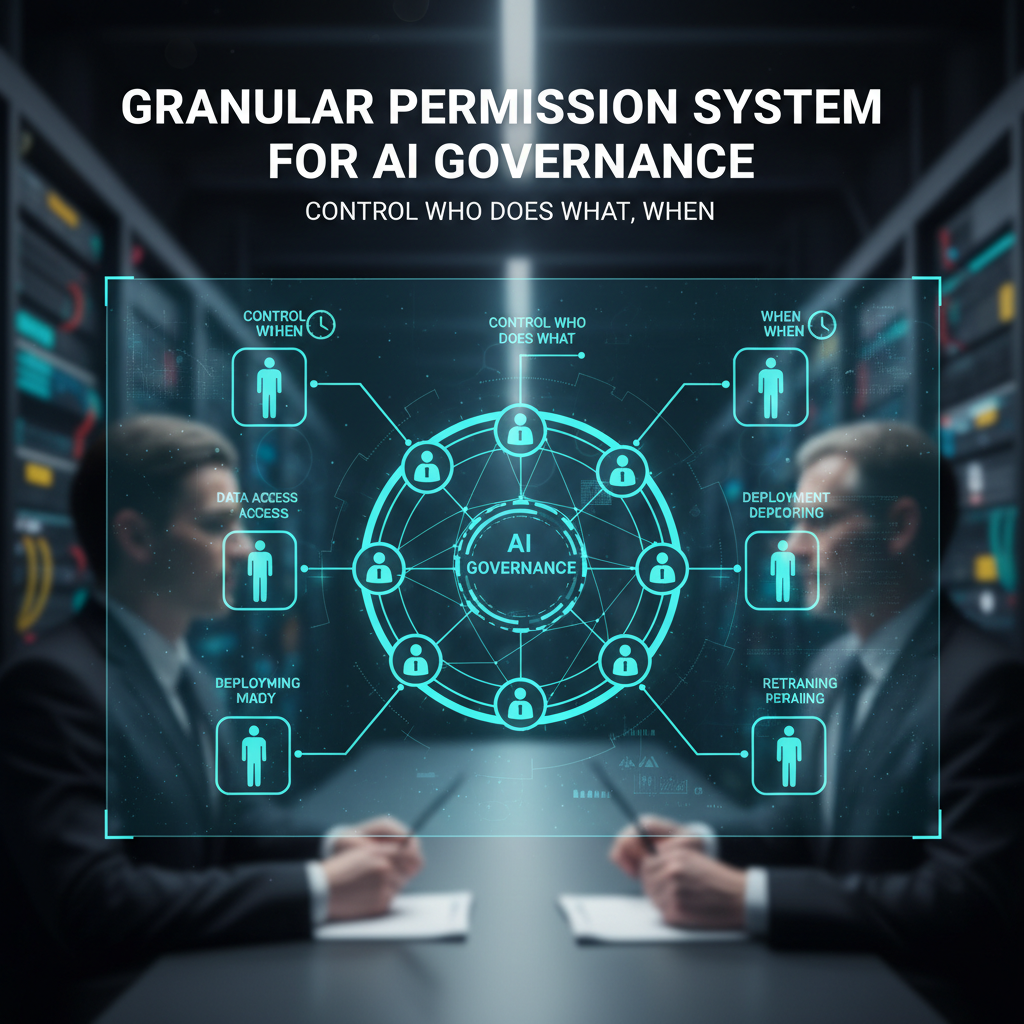
In the rapidly evolving landscape of autonomous AI agents, establishing a robust permission system AI governance framework is no longer optional—it's imperative. As AI agents take on increasingly critical roles, from automating customer service to making financial decisions, the need for precise control over their operations and the human interventions that guide them becomes paramount. Without a granular AI control mechanism, organizations face significant risks related to security breaches, compliance failures, and operational inefficiencies. This article explores why a sophisticated role-based access control AI system is essential for effective enterprise AI management and how AgentTask Pro provides the tools to achieve it.
The complexities of modern AI deployments demand more than just basic user authentication. You need to define who can view, approve, modify, or escalate agent tasks, and under what specific circumstances. This level of detail ensures that your human-in-the-loop (HITL) processes are secure, auditable, and aligned with your organizational policies and regulatory obligations. AgentTask Pro empowers operational managers, compliance officers, and executive leaders to confidently deploy AI agents, knowing that every action is subject to a meticulously defined and enforced permission structure.
Managing Access in Complex AI Organizations
As AI initiatives scale within an enterprise, the number of AI agents, human operators, and associated tasks grows exponentially. Without a coherent permission system AI, managing access and ensuring accountability becomes an impossible challenge. Traditional IT access controls, designed for human-centric software, often fall short when applied to the unique dynamics of AI agents and their oversight.
The Growing Need for AI Oversight
The proliferation of AI agents across various business functions introduces new vectors for operational risk. An unchecked or misconfigured agent could unintentionally compromise data, make erroneous decisions, or even propagate biases. Effective AI oversight, therefore, hinges on defining clear boundaries and responsibilities for every human interaction with these autonomous systems. This isn't just about preventing malicious activity; it's about safeguarding against human error in complex, fast-moving AI environments.
Challenges of Generic Access Control
Many organizations initially try to adapt existing access control systems for their AI governance needs. However, generic access controls lack the specificity required for AI operations. They often treat all users uniformly, without distinguishing between the nuanced roles needed for AI agent management—such as an administrator configuring an agent, a reviewer approving its output, or an auditor examining its past actions. This "one-size-fits-all" approach leads to either overly permissive access (increasing risk) or overly restrictive access (hindering operational efficiency). A tailored permission system AI is crucial for bridging this gap.
Designing Effective Role-Based Permissions (RBAC) for AI Agents
Role-based access control AI (RBAC) provides the foundational framework for managing permissions in complex AI environments. Instead of assigning individual permissions to each user, RBAC groups users into roles (e.g., "AI Administrator," "Task Reviewer," "Compliance Officer") and assigns a predefined set of permissions to each role. This simplifies management, enhances security, and ensures consistency across your AI operations.
Core Principles of RBAC in AI
Implementing RBAC for AI agents involves defining roles based on the specific functions and responsibilities within your human-in-the-loop (HITL) workflows. Each role should correspond to a unique set of actions that users can perform, such as:
- Viewing AI agent tasks
- Approving or rejecting agent outputs
- Modifying agent decisions
- Escalating tasks to higher authority
- Configuring agent parameters
- Accessing audit logs and analytics
This structured approach ensures that individuals only have access to the information and functionalities relevant to their job functions, minimizing the potential for unauthorized actions or data exposure.
Customizing Roles for AI Operations
Effective enterprise AI management demands a flexible RBAC system that can be customized to fit your organization's unique structure and AI use cases. For instance, a "Banking Compliance Officer" might need read-only access to all AI agent decisions and audit trails, while a "Claims Adjuster Reviewer" needs the ability to approve or modify specific insurance claims processed by an AI agent. AgentTask Pro’s permission system is designed with this flexibility in mind, offering a 3-tier permission system (Admin, Reviewer, Viewer) that can be further refined to match your operational requirements.
Balancing Security and Agility
The goal of any permission system is to strike a balance between rigorous security and operational agility. Overly strict permissions can create bottlenecks and slow down critical workflows, while lax permissions introduce unacceptable risks. A well-designed permission system AI empowers teams to work efficiently while maintaining stringent control. This balance is particularly important for AI agents, where timely human intervention can be crucial for performance and preventing costly errors.
AgentTask Pro's Advanced Permission Engine
AgentTask Pro is engineered specifically to address the intricate demands of AI agent governance. Its advanced permission engine provides the granular control and flexibility necessary for operational managers to confidently oversee autonomous AI agents.
Beyond Basic Roles: Admin, Reviewer, Viewer
AgentTask Pro's foundational 3-tier permission system offers a robust starting point:
- Admin: Full control over platform settings, user management, agent configurations, and data. Ideal for CTOs, IT managers, and lead AI engineers.
- Reviewer: Can view, approve, reject, or modify AI agent tasks, and initiate escalations. Perfect for operational managers and subject matter experts.
- Viewer: Can monitor AI agent performance, view tasks, and access analytics dashboards without making changes. Suited for executives or auditors.
This tiered structure is just the beginning. The platform allows for further customization, enabling you to define specific permissions within each tier, or even create new custom roles that align precisely with your business processes. For example, you might create a "High-Risk Task Reviewer" role with additional approval requirements or a "Data Analyst" role with access limited to specific analytics dashboards.
Tailored Permissions for Specific Tasks
Imagine an AI agent processing loan applications. With AgentTask Pro, you can ensure that only authorized loan officers can Approve with Modifications applications flagged by the AI, while a junior team member can only Reject applications that clearly fail initial checks. This level of granular AI control ensures that critical decisions are always handled by the right personnel, reflecting a deep understanding of contextual nuances. The platform's ability to support features like sampling-based approval and risk-based approval further integrates with the permission system, allowing you to prioritize human intervention where it matters most, based on predefined risk classifications.
Integrating with Your Existing Workflow
AgentTask Pro doesn't operate in a vacuum. Its robust API allows for seamless integration with your existing identity management systems, ensuring that user roles and permissions are synchronized across your enterprise. Whether you're using LangChain, AutoGen, CrewAI, n8n, or Zapier, AgentTask Pro's framework-agnostic AI platform ensures that your permission structures extend across your diverse AI agent stack. This integrated approach simplifies onboarding, reduces administrative overhead, and provides a single source of truth for access control. You can explore how AgentTask Pro's permission system enhances large-scale operations with our Enterprise HITL Solution: Scalable AI Governance for Large Organizations.
Ensuring Secure and Accountable AI Operations
A well-implemented permission system AI governance strategy is a cornerstone of responsible AI adoption. It directly contributes to the security, compliance, and accountability of your autonomous AI agents.
Meeting Regulatory Demands (AI Act, GDPR)
The regulatory landscape for AI is rapidly maturing, with frameworks like the EU AI Act 2025 setting stringent requirements for transparency, accountability, and human oversight. A sophisticated permission system AI is indispensable for demonstrating compliance. By defining who can initiate, review, or approve AI agent actions, you create a verifiable chain of responsibility. Coupled with AgentTask Pro's certified audit trail, organizations can easily prove to regulators that appropriate human oversight and control mechanisms are in place. Learn more about navigating regulations in our article on EU AI Regulation & Your Enterprise: A Roadmap to Compliance with AgentTask Pro.
The Role of Permissions in AI Accountability and Transparency
Accountability in AI means understanding who is responsible for what when an AI agent makes a decision or takes an action. Granular permissions clearly delineate these responsibilities. When combined with a comprehensive audit trail, every interaction—from an agent's proposed action to a reviewer's approval or modification—is logged and traceable. This level of transparency builds trust, both internally among stakeholders and externally with customers and regulatory bodies. The link between clear permissions and transparency is explored further in Achieving AI Transparency & Accountability with AgentTask Pro's Audit Trail.
Mitigating Risks with Granular Control
By implementing granular AI control through a robust permission system, organizations can significantly mitigate operational, security, and reputational risks. Unauthorized access, accidental misconfigurations, or unapproved actions by AI agents can lead to severe consequences. A tightly controlled permission structure acts as a critical safeguard, ensuring that only authorized and qualified personnel can influence AI agent behavior. Furthermore, features like Workspace Isolation for AI Agents: Secure Environments for Collaborative Development provide an additional layer of security, segmenting environments based on data sensitivity and project requirements. This proactive risk management approach is vital for any enterprise leveraging AI.
FAQ: Granular Permission Systems for AI Governance
Q: What is granular AI control, and why is it important for AI agents?
A: Granular AI control refers to the ability to define highly specific permissions for who can interact with, approve, or modify AI agent tasks and configurations. It's crucial for AI agents because it ensures that only authorized individuals can influence autonomous systems, thereby enhancing security, compliance, and accountability, especially in high-stakes operational environments.
Q: How does role-based access control (RBAC) apply to AI governance?
A: RBAC in AI governance assigns permissions based on user roles (e.g., "AI Reviewer," "Compliance Officer"), rather than individual users. This simplifies management of access for many users and AI agents, ensuring consistency and making it easier to scale your permission system AI as your AI operations grow.
Q: Can AgentTask Pro integrate with existing enterprise identity management systems?
A: Yes, AgentTask Pro features a public REST API that allows for seamless integration with your existing identity management systems. This ensures that your user roles and permissions are synchronized and consistently applied across your entire enterprise IT infrastructure, streamlining user onboarding and access management.
Q: How do granular permissions help with AI compliance (e.g., EU AI Act, GDPR)?
A: Granular permissions are fundamental for AI compliance by establishing clear accountability. They allow organizations to define and enforce who has the authority to make or approve AI-driven decisions, which is critical for demonstrating human oversight and auditability under regulations like the EU AI Act and GDPR. Every action tied to a specific role and user creates an undeniable audit trail.
Q: What are the benefits of a 3-tier permission system for AI management?
A: A 3-tier permission system (like Admin, Reviewer, Viewer) offers a structured approach to AI management, providing distinct levels of access and control. This simplifies user management, ensures appropriate separation of duties, and helps prevent unauthorized modifications, contributing to overall operational efficiency and security within your enterprise AI management framework.
Conclusion
The effective deployment and management of autonomous AI agents hinge on a robust permission system AI governance. For operational managers navigating the complexities of AI, the ability to implement role-based access control AI with truly granular AI control is non-negotiable. It's the mechanism that translates organizational policy into actionable oversight, ensuring that every AI decision is transparent, accountable, and compliant.
AgentTask Pro offers a purpose-built platform that not only meets but anticipates the demands of future AI regulation and operational scale. By providing contextual reasoning, a Kanban-style dashboard, multi-reviewer SLA capabilities, and a sophisticated 3-tier permission system, AgentTask Pro empowers non-technical operators to maintain firm control over their AI agents. Protect your enterprise, ensure compliance, and boost operational efficiency. Ready to take command of your AI agents? Explore AgentTask Pro's features today.