The Future of Autonomous AI Teams: Navigating the Next Frontier
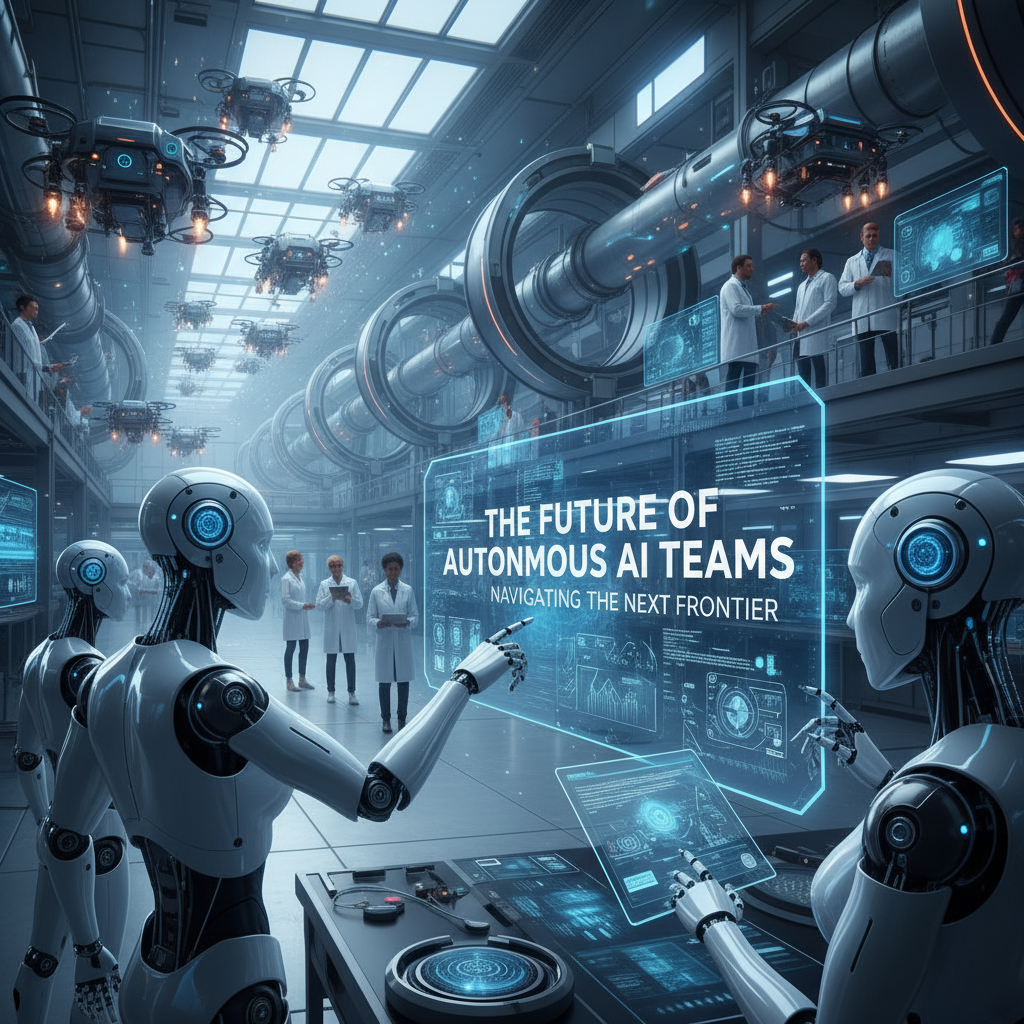
The landscape of artificial intelligence is evolving at a breakneck pace. What began with intelligent automation and supervised machine learning is now rapidly progressing towards truly autonomous AI teams. These self-governing agents are poised to redefine how businesses operate, promising unprecedented levels of efficiency, innovation, and problem-solving capabilities. However, unleashing the full potential of these AI workforces requires careful navigation, strategic planning, and robust control mechanisms.
This article delves into the exciting evolution of autonomous AI, the emergence of collaborative AI agent networks, and the critical challenges that arise with their deployment. We'll explore how organizations can effectively prepare for an AI-driven future, ensuring both safety and scalability. Understanding how to maintain autonomous AI control is paramount for any enterprise looking to stay ahead in this transformative era.
Understanding the Evolution of Autonomous AI
For decades, AI has been a powerful tool, yet often required explicit instructions and constant human intervention. From expert systems to machine learning models, AI's role was largely assistive. Today, we're witnessing a paradigm shift: the rise of truly autonomous AI agents capable of setting their own goals, making decisions, and executing tasks without continuous human oversight.
This evolution is fueled by advancements in large language models, reinforcement learning, and sophisticated agent architectures. These agents can learn from their environment, adapt to new situations, and even initiate actions based on complex reasoning. The implications for industries from finance to healthcare, and manufacturing to customer service, are profound, promising a new era of innovation and productivity.
From Rule-Based Systems to Self-Governing Agents
Traditional AI often operated on predefined rules or patterns identified in data. While effective for specific, well-defined problems, these systems lacked adaptability and initiative. Modern autonomous agents, however, are designed with a degree of self-awareness and goal-orientation. They can break down complex problems, consult external tools, communicate with other agents, and iterate on solutions, mimicking aspects of human cognitive processes. This shift moves AI from merely executing commands to proactively achieving objectives.
The Promise of True Autonomy in Business
Imagine AI agents autonomously managing supply chains, optimizing marketing campaigns in real-time, or even conducting scientific research. This is the promise of true autonomy. Businesses can offload repetitive, time-consuming, or data-intensive tasks to these agents, freeing human talent for more strategic, creative, and interpersonal roles. This not only boosts efficiency but also enables businesses to operate with unparalleled agility and insight. The strategic AI agent management for these capabilities becomes a competitive differentiator.
The Rise of Collaborative AI Agent Networks
The power of autonomous AI truly escalates when individual agents can collaborate. Instead of isolated units, businesses are now exploring "AI agent networks" – teams of specialized AI agents working together, sharing information, and coordinating efforts to achieve a common, overarching goal. This collaborative paradigm unlocks capabilities far beyond what any single AI or human could achieve alone.
These networks can tackle multifaceted problems that require diverse expertise. For instance, a marketing campaign might involve one AI agent for market research, another for content generation, a third for ad placement optimization, and a fourth for performance analytics, all communicating and adjusting in real-time. Managing such complex interactions and ensuring alignment across a diverse network is a key challenge.
Orchestrating AI Swarms for Complex Tasks
Just as human teams divide and conquer, AI agent swarms can specialize. One agent might excel at data analysis, another at communication, and a third at creative problem-solving. Orchestrating these "swarms" effectively means defining clear roles, establishing communication protocols, and providing a shared understanding of the mission. This level of coordination is critical for tasks like advanced research, complex engineering design, or dynamic business process optimization.
The Interplay Between Human Expertise and AI Decisions
While autonomous, these networks thrive when seamlessly integrated with human expertise. Humans provide the high-level strategy, ethical guidance, and qualitative judgment, while AI agents handle the execution, data processing, and rapid iteration. This symbiotic relationship ensures that the autonomous system remains aligned with business objectives and societal values, creating a powerful human-AI partnership rather than a replacement. This delicate balance underscores the need for robust AI operations platform solutions.
Addressing Challenges in Scalable AI Deployment
The excitement surrounding autonomous AI agents is palpable, but their widespread adoption in production environments brings a host of operational challenges. Deploying and scaling these agents without proper oversight can lead to unforeseen risks, inefficiencies, and even ethical dilemmas. Simply put, building AI agents is one thing; reliably running them in production and ensuring their safe operation is another entirely.
This is where the concept of a "control room" for AI agents becomes indispensable. Organizations need centralized visibility, governance, and the ability to intervene when necessary. Without these, the promise of autonomous AI can quickly turn into a chaotic and uncontrollable system. Effectively managing these issues is central to navigating AI industry trends successfully.
The Critical Need for Oversight and Control in Autonomous AI
Autonomous agents, by definition, make decisions independently. While this is their strength, it also presents a significant challenge: how do you ensure these decisions align with business goals, regulatory requirements, and ethical standards? Unchecked autonomy can lead to unpredictable behavior, escalating costs, or even reputational damage. Comprehensive autonomous AI control is non-negotiable for responsible deployment. AI Agent Management & Control: Take Command of Your Autonomous AI Teams highlights the importance of such systems.
Platforms designed for AI agent management provide the tools to monitor agent activity, review their proposed actions, and implement human approval gates for high-risk decisions. This human-in-the-loop mechanism is crucial for maintaining trust and ensuring accountability.
Ensuring Safety, Compliance, and Ethical AI Behavior
As AI agents interact with real-world systems and sensitive data, ensuring their safety and compliance becomes paramount. Consider an AI agent making financial transactions or managing patient data – the consequences of errors or malicious intent are severe. Organizations must implement systems that provide audit trails, enforce regulatory compliance (like GDPR or HIPAA), and align AI behavior with ethical guidelines.
This includes setting clear boundaries for agent actions, implementing robust security measures, and having a transparent process for reviewing and overriding decisions. The goal is to maximize the benefits of autonomy while minimizing inherent risks. For deeper insights, consider reading about Human-in-the-Loop AI Approval: How AgentTask Pro Ensures Responsible Automation.
Overcoming Operational Bottlenecks in AI Agent Management
Scaling autonomous AI involves more than just deploying more agents. It requires an operational framework to manage their lifecycle, monitor their performance, and troubleshoot issues. Without a unified dashboard and intelligent alerting, engineering teams can quickly become overwhelmed by a multitude of agents operating across different tasks. This leads to operational bottlenecks, delayed responses to critical events, and a lack of clear visibility into the AI workforce's overall health and impact. A dedicated AI operations platform like AgentTask Pro offers a centralized solution to these common hurdles.
Preparing Your Organization for AI-Driven Workforces
Successfully integrating autonomous AI teams into your organization is a strategic undertaking, not merely a technical one. It requires foresight, an adaptive mindset, and the right tools. The transition to an AI-driven workforce is about augmentation, not replacement, where humans and AI collaborate to achieve superior outcomes. Organizations that prepare effectively will gain a significant competitive edge in the evolving AI industry trends.
This preparation involves not just technological adoption, but also cultural shifts, new skill development, and the establishment of robust governance frameworks. It's about creating an ecosystem where AI agents can thrive under controlled, monitored conditions, ultimately enhancing human capabilities and driving business growth.
Building an AI-Ready Infrastructure
Your existing infrastructure must be ready to support the demands of autonomous AI agents. This includes scalable computing resources, secure data pipelines, and robust APIs for seamless integration. More importantly, it requires a centralized platform for agent orchestration, monitoring, and control. This platform should provide features like Kanban boards for task visualization, approval panels for decision oversight, and analytics dashboards for performance tracking. These capabilities are crucial for effective AgentTask Pro Dashboard: Your Command Center for AI Operations.
Redefining Roles: Human-AI Collaboration at its Best
The introduction of autonomous AI agents will inevitably change human roles. Instead of performing routine tasks, human employees will increasingly focus on strategic planning, creative problem-solving, ethical oversight, and training/refining AI systems. Organizations must invest in upskilling their workforce to collaborate effectively with AI, understanding how to interact with agents, interpret their outputs, and intervene when necessary. This fosters a partnership where human ingenuity is amplified by AI's efficiency.
Strategic Implementation for Maximum Impact
Implementing autonomous AI should be a phased, strategic process. Start with well-defined, low-risk areas to gain experience and build confidence. Gradually expand to more complex applications, continuously monitoring performance and refining your approach. Key to this is choosing an AI operations platform that offers flexibility, scalability, and robust security. For insights into selecting the right tools, refer to Choosing an AI Operations Platform: What to Look for in 2026. By approaching deployment with a clear strategy and the right tools, organizations can maximize the positive impact of autonomous AI.
Frequently Asked Questions About Autonomous AI Teams
What is an autonomous AI agent?
An autonomous AI agent is a software entity capable of perceiving its environment, making decisions, and taking actions independently to achieve specific goals, without continuous human intervention. They can learn, adapt, and even communicate with other agents.
Why is human oversight still necessary for autonomous AI?
Despite their autonomy, human oversight remains crucial for several reasons: ensuring ethical alignment, complying with regulations, handling unforeseen edge cases, and providing strategic guidance that AI cannot yet grasp. Human-in-the-loop mechanisms provide a safety net and maintain accountability.
How do I ensure my AI agents are secure and compliant?
Ensuring security and compliance for AI agents requires robust access controls, data encryption, audit trails for all agent actions, and a system for human approval of sensitive or high-risk decisions. Implementing a dedicated AI operations platform helps centralize these critical functions.
What are the biggest risks of deploying autonomous AI?
Major risks include unpredictable agent behavior, ethical breaches, security vulnerabilities, unintended consequences from unsupervised actions, and difficulty in debugging or understanding complex agent decisions. These risks underscore the need for effective autonomous AI control and monitoring.
Conclusion
The emergence of autonomous AI teams marks a pivotal moment in the evolution of technology and business. While promising unparalleled gains in efficiency and innovation, their successful integration hinges on effective autonomous AI control and intelligent AI agent management. Organizations that embrace this future with a strategic mindset and the right tools will not only thrive but also shape the next generation of work.
Platforms like AgentTask Pro are specifically designed to address these challenges, offering the crucial visibility, oversight, and control needed for scaling autonomous AI with confidence. By providing a "control room" for your AI agents, you can see every action, approve every decision, and ensure full context, enabling your teams to harness the power of AI safely and responsibly. Start your journey towards a controlled, efficient AI-driven future. Explore AgentTask Pro's powerful features today and transform your AI operations.