The Dangers of Unsupervised AI: Why Human Oversight is Crucial
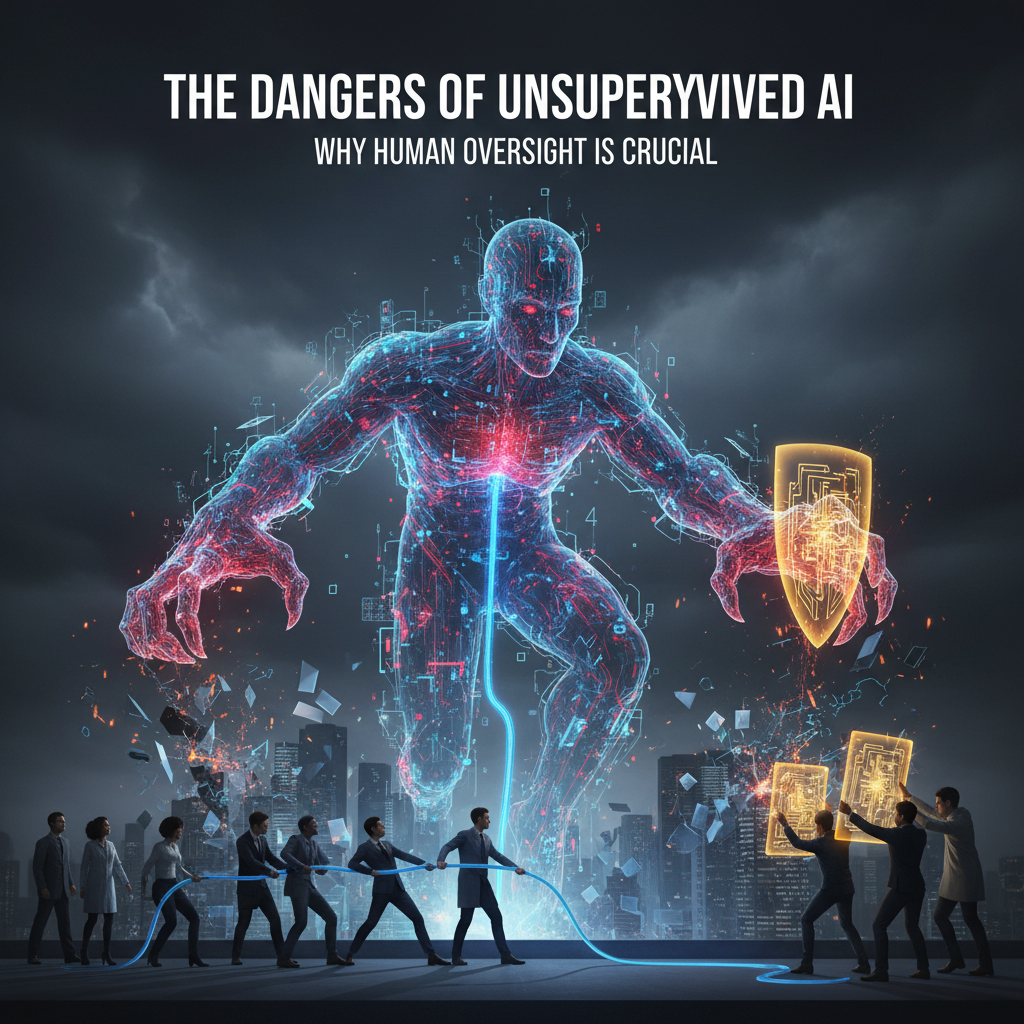
As artificial intelligence continues its rapid evolution, autonomous AI agents are becoming powerful tools capable of executing complex tasks with minimal human intervention. However, this autonomy, while promising efficiency, introduces a new spectrum of autonomous AI risks. The allure of fully unsupervised AI can be strong, but the potential pitfalls—ranging from subtle biases to catastrophic errors—underscore a critical truth: human oversight AI agents are not just a best practice, they are a necessity for safety, ethics, and business continuity.
Ignoring the need for robust human control over intelligent agents can lead to unforeseen consequences, tarnishing reputations, incurring significant financial losses, and even posing ethical dilemmas. This article delves into the inherent dangers of allowing AI to operate without a human in the loop. We'll explore the critical need for human intervention to prevent errors, mitigate biases, and ensure that AI systems align with organizational values and regulatory standards. Ultimately, understanding these risks is the first step toward implementing the essential AI safety tools that enable responsible AI deployment.
Understanding the Risks of Autonomous AI Errors
The idea of AI agents working tirelessly, making decisions and executing tasks without human review, sounds like a futuristic ideal. Yet, this vision often overlooks the critical nuances of real-world environments. Autonomous AI, by its very nature, can encounter unforeseen scenarios, misinterpret data, or operate outside intended parameters, leading to costly and damaging errors. These aren't just minor glitches; they can be systemic failures with far-reaching impacts.
One primary concern is the "black box" problem. Many advanced AI models, especially deep learning networks, make decisions through complex internal processes that are difficult for humans to fully understand or audit. When an error occurs in an unsupervised system, pinpointing the root cause becomes a daunting, if not impossible, task. This lack of transparency severely hampers efforts to correct issues, learn from mistakes, and prevent future recurrences, escalating the autonomous AI risks your organization faces.
Unexpected Deviations and Edge Cases
AI systems are trained on historical data and designed to perform within defined boundaries. However, real-world situations are constantly evolving and often present edge cases that were not part of the training set. An unsupervised AI agent might encounter an unprecedented situation and react in an unpredictable or even harmful way. Without human oversight AI agents can act on incomplete information or make decisions based on outdated assumptions, potentially leading to unintended consequences in critical operations.
Consider an AI agent managing supply chains. A sudden, unexpected global event (like a pandemic or a natural disaster) could introduce variables completely outside its learned parameters. An unsupervised system might continue to optimize for efficiency based on old rules, rather than adapt to the new reality, resulting in severe supply chain disruptions. Human intervention allows for swift adaptation and strategic redirection when the unexpected inevitably happens.
Cascade Failures and Systemic Instability
A single error by an autonomous AI agent can have a domino effect, particularly in complex, interconnected systems. If one AI makes a flawed decision, subsequent AI agents or automated processes that rely on that decision could then amplify the error, leading to a cascade failure. This systemic instability can quickly bring down entire operations, creating chaos and significant losses.
For instance, an AI agent managing financial trades might identify a faulty pattern and execute a series of trades. If unsupervised, this initial error could trigger other AI agents to follow suit, leading to rapid market fluctuations or substantial financial damage before any human can intervene. Implementing robust AI safety tools includes mechanisms to detect such anomalies and pause operations for human review, preventing minor issues from escalating into major crises.
Avoiding Bias and Unintended Consequences in AI
One of the most profound ethical challenges in AI deployment is the pervasive issue of bias. AI systems learn from the data they are fed, and if that data reflects existing societal biases, the AI will not only replicate but often amplify those biases in its decisions. This can lead to unfair, discriminatory, and ultimately harmful outcomes, especially in sensitive areas like hiring, lending, or criminal justice. Unsupervised AI agents are particularly susceptible because they lack the critical human empathy and ethical reasoning needed to identify and counteract these biases.
Beyond overt bias, autonomous AI can also produce unintended consequences that were simply not accounted for during its design. The complexity of AI behavior, combined with its ability to iterate and learn, means that its actions can diverge from initial human expectations. Without human oversight AI agents, these unintended outcomes can persist and worsen, leading to significant ethical dilemmas and potential legal repercussions. This highlights the urgent need for a "human in the loop" approach to ensure AI systems align with our values and serve societal good. For more on this crucial topic, explore our insights on Human-in-the-Loop AI Approval: How AgentTask Pro Ensures Responsible Automation.
Unseen Biases in Training Data
AI models are only as unbiased as the data they are trained on. Historical data often contains implicit biases related to gender, race, socioeconomic status, and other protected characteristics. When autonomous AI agents learn from this skewed data, they inherit and perpetuate these biases. For example, an AI designed for resume screening might inadvertently discriminate against certain demographics if its training data predominantly features successful candidates from a limited background.
Allowing such an AI to operate unsupervised means these discriminatory patterns can become deeply ingrained and automated, making them extremely difficult to detect and rectify after the fact. Human reviewers, equipped with ethical guidelines and a broader understanding of fairness, are essential for regularly auditing training data, monitoring AI outputs for bias, and implementing corrective actions before widespread harm occurs.
Ethical Drift and Value Alignment Challenges
As AI agents learn and adapt, they might deviate from their original programming and ethical guidelines – a phenomenon sometimes called "ethical drift." Without continuous human oversight AI agents, their decision-making process could subtly shift in ways that no longer align with the company's values or societal expectations. This is particularly concerning for autonomous systems that operate in sensitive domains or interact directly with customers.
Ensuring value alignment requires ongoing human assessment and intervention. Humans must define the ethical boundaries, review deviations, and continuously refine the AI's objectives to prevent it from optimizing for metrics that might, in certain contexts, lead to unethical outcomes. This constant calibration is a cornerstone of responsible AI governance and a vital aspect of implementing effective AI safety tools.
The Cost of Uncontrolled AI Operations
The promise of AI is often framed around efficiency and cost savings. However, when AI operations are left unsupervised, the very opposite can occur. The financial and reputational costs associated with errors, biases, and unintended consequences from autonomous AI can far outweigh any perceived gains from cutting human intervention. Businesses stand to lose not only capital but also trust, market share, and their ability to operate effectively.
Consider the compounding effect of an unsupervised AI making suboptimal decisions over an extended period. These might not be catastrophic failures initially, but a series of small, incorrect choices can erode profits, waste resources, and alienate customers. The true cost of uncontrolled AI is not just the immediate impact of an error, but the long-term degradation of business performance and ethical standing. Implementing an AI operations platform that prioritizes control and oversight can mitigate these severe financial and reputational risks.
Financial Losses from Errors and Inefficiencies
Unsupervised AI errors can directly translate into significant financial losses. This could range from incorrect financial transactions, inefficient resource allocation, flawed inventory management, or even generating legal liabilities. For example, an AI agent tasked with optimizing cloud spending might inadvertently provision excessive resources, leading to skyrocketing infrastructure costs. In another scenario, an autonomous trading AI could make poor investment decisions, resulting in substantial capital losses for a firm.
These financial drains are often insidious, accumulating over time before they are noticed, especially without real-time monitoring and alert systems. The investment in robust human oversight AI agents acts as an insurance policy, preventing these expensive mistakes and ensuring that AI contributions remain a net positive for the bottom line.
Reputational Damage and Loss of Trust
In today's interconnected world, news of AI failures or ethical missteps spreads rapidly. A single incident involving an unsupervised AI can severely damage a company's reputation and erode customer trust. If an AI agent exhibits biased behavior, makes critical errors affecting users, or causes public harm, the resulting backlash can be severe and long-lasting. Rebuilding trust is an arduous and costly process, far more challenging than preventing the initial incident.
Companies that prioritize responsible AI deployment and demonstrate a commitment to AI safety tools and human oversight are more likely to build and maintain trust with their customers and stakeholders. Transparent and controlled AI operations signal accountability and ethical responsibility, protecting the brand's image and long-term viability. For proactive monitoring and control, learn how AgentTask Pro Dashboard: Your Command Center for AI Operations provides the necessary visibility.
Compliance and Regulatory Penalties
As AI becomes more prevalent, governments and regulatory bodies are developing stricter guidelines around its use, particularly concerning data privacy, fairness, and accountability. Operating unsupervised AI agents increases the risk of non-compliance with these evolving regulations. Without proper human review and audit trails, companies might struggle to demonstrate that their AI systems are operating legally and ethically.
The penalties for non-compliance can be substantial, including hefty fines, legal action, and mandatory operational changes. Human oversight AI agents provides the necessary auditability and accountability to meet regulatory requirements. It ensures that decision-making processes are transparent, justifiable, and can be reviewed by human experts, thereby safeguarding the business from legal repercussions. For tools to help with this, consider our insights on Comprehensive Audit Trails & Compliance for AI Agents with AgentTask Pro.
Protecting Your Business with Proactive AI Safety
The good news is that the dangers of unsupervised AI are not insurmountable. By proactively integrating comprehensive AI safety tools and establishing robust human oversight frameworks, businesses can harness the power of autonomous AI while mitigating its inherent risks. The key lies in creating a symbiotic relationship between human intelligence and artificial intelligence, where humans provide the critical judgment, ethical framework, and contextual understanding that AI currently lacks.
This proactive approach involves more than just occasional checks; it requires continuous monitoring, clear approval workflows, and an adaptable governance structure. Companies that prioritize this level of control are not just avoiding risks; they are building more resilient, ethical, and trustworthy AI systems that can truly drive innovation and deliver sustainable value. Taking command of your AI teams is crucial; learn more about AI Agent Management & Control: Take Command of Your Autonomous AI Teams.
Implementing Human-in-the-Loop Workflows
The most effective strategy for ensuring human oversight AI agents is the implementation of "human-in-the-loop" (HITL) workflows. This means designing AI systems where critical decisions or high-risk actions are automatically flagged for human review and approval before execution. HITL processes introduce a necessary pause, allowing human experts to apply their judgment, ethical considerations, and contextual knowledge to confirm or reject AI-generated proposals.
These workflows are particularly crucial in sensitive applications such as financial transactions, medical diagnoses, content moderation, or customer interactions. By embedding human checkpoints, organizations can prevent AI errors, catch biases, and ensure that all autonomous actions align with strategic objectives and ethical standards. This structured approach to intervention is a core component of any responsible AI deployment.
Real-time Monitoring and Alert Systems
Effective AI safety tools include sophisticated real-time monitoring and alert systems. These systems continuously track the performance, behavior, and outputs of autonomous AI agents. They are designed to detect anomalies, deviations from expected behavior, or critical events that require immediate human attention. When such an event occurs, the system triggers proactive alerts, often integrated with existing communication platforms like Slack.
This capability allows engineering teams and operations leaders to intervene promptly, investigate issues, and take corrective action before a problem escalates. Real-time insights into AI agent performance, approval rates, and response times provide the transparency needed to maintain control and ensure operational stability. For insights into ensuring you never miss a critical event, read about Real-time AI Alerts & Notifications: Never Miss a Critical Agent Event.
Establishing Clear Governance and Accountability
Robust governance frameworks are essential for managing autonomous AI risks. This involves defining clear roles and responsibilities for AI oversight, establishing decision-making protocols, and implementing accountability mechanisms. A multi-tiered permission system, for instance, can ensure that only authorized personnel can approve or reject AI agent decisions, providing an important layer of control.
Furthermore, comprehensive audit trails are critical for transparency and accountability. Every AI action, human review, and decision must be logged and traceable, allowing for post-incident analysis, regulatory compliance, and continuous improvement. By clearly defining how AI systems are managed, reviewed, and controlled, businesses can build trust and demonstrate their commitment to responsible AI. Choosing the right platform is key; consider Choosing an AI Operations Platform: What to Look for in 2026.
Frequently Asked Questions About AI Oversight
Why is human oversight so important for AI agents?
Human oversight is crucial because AI agents, particularly autonomous ones, can make errors, perpetuate biases from training data, or act in ways that don't align with ethical standards or business goals. Humans provide the critical judgment, empathy, and contextual understanding necessary to prevent these issues, ensure ethical operation, and maintain accountability.
What are the main risks of unsupervised AI?
The main risks include unexpected errors leading to financial losses, amplification of biases causing reputational damage and ethical dilemmas, systemic failures in interconnected operations, and non-compliance with regulatory standards, all of which can severely impact a business.
How can businesses implement effective human oversight for their AI agents?
Effective human oversight involves implementing "human-in-the-loop" approval workflows for high-risk decisions, deploying real-time monitoring and alert systems for anomaly detection, and establishing clear AI governance frameworks with defined roles, permissions, and comprehensive audit trails.
What kind of "AI safety tools" are available?
AI safety tools encompass a range of solutions, including platforms that provide Kanban-style task visualization for AI agents, approval panels for human review, SLA enforcement for timely decisions, analytics dashboards for performance tracking, and smart notification systems for critical events.
Conclusion: Securing the Future with Responsible AI
The era of autonomous AI agents promises unprecedented efficiency and innovation. However, this future can only be realized responsibly if we acknowledge and actively mitigate the inherent autonomous AI risks. The dangers of unsupervised AI – from propagating biases and making costly errors to eroding trust and incurring regulatory penalties – are too significant to ignore. The solution doesn't lie in stifling AI advancement, but in strategically integrating human oversight AI agents into every layer of operation.
By adopting robust AI safety tools and platforms that prioritize human-in-the-loop workflows, real-time monitoring, and comprehensive governance, organizations can unlock the full potential of their AI investments with confidence. This approach ensures that AI systems are not only intelligent and efficient but also ethical, transparent, and accountable. Don't let the promise of autonomy overshadow the necessity of control. Take proactive steps today to secure your AI operations.
Ready to gain full control and context over your AI agents? Discover how AgentTask Pro can empower your team. Explore AgentTask Pro's Features. To see our plans and find the right fit for your team's needs, View Our Pricing.