AI Risk Classification: Proactive Identification of High-Stakes Agent Actions
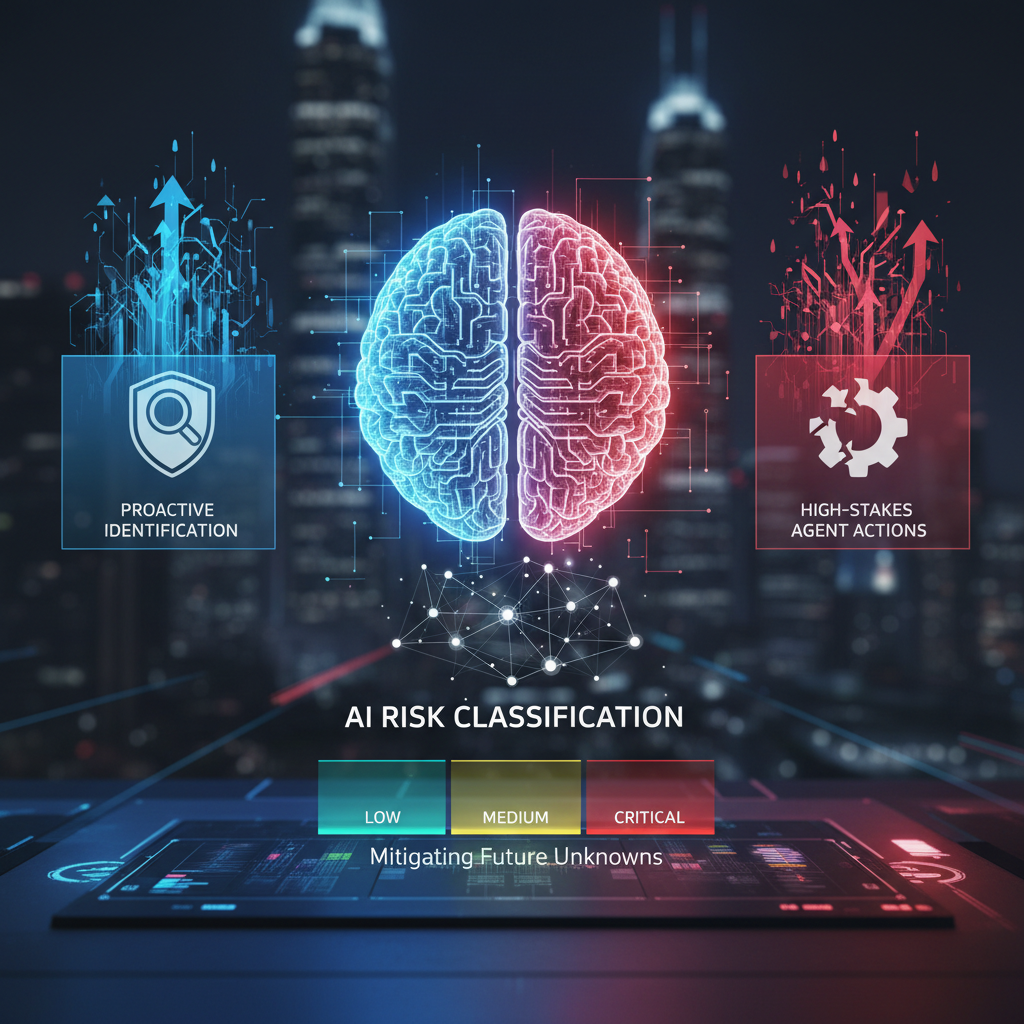
The proliferation of autonomous AI agents promises unprecedented efficiency, but it also introduces a new frontier of operational risk. Without proper oversight, these agents, operating across critical business functions, can inadvertently make decisions with significant financial, reputational, or even regulatory consequences. This is where robust AI risk classification becomes not just beneficial, but essential. Effectively identifying and categorizing potential risks before they escalate is crucial for maintaining control and trust in your AI-driven operations.
For operational managers, AI/ML engineering teams, and compliance officers, understanding and implementing a proactive AI risk classification strategy is paramount. This article will delve into what constitutes an AI agent risk profile, how to automate risk assessment, customize risk tiers, and ultimately, prioritize human intervention where it matters most. We'll explore how platforms like AgentTask Pro empower non-technical operators to navigate the complexities of AI risk management, ensuring that your high-risk AI applications remain compliant, ethical, and under your vigilant control, particularly with the looming requirements of the AI Act 2025.
Understanding AI Agent Risk Profiles
The first step in effective AI risk classification is to thoroughly understand the inherent risk profile of each AI agent deployed within your ecosystem. Unlike traditional software, AI agents can exhibit emergent behaviors, operate with varying degrees of autonomy, and interact with dynamic, real-world data, making their risk assessment a unique challenge. A comprehensive risk profile considers several dimensions, moving beyond simple failure rates to encompass the broader impact of an agent's decisions.
Defining Inherent vs. Operational Risk
Inherent risk stems from the nature of the AI agent itself—its design, the data it was trained on, its decision-making paradigm (e.g., rule-based vs. black-box neural network), and the criticality of its function. For instance, an AI agent managing financial transactions has a higher inherent risk than one drafting internal marketing copy. Operational risk, on the other hand, arises from how the AI agent is deployed and managed in a real-world setting, including integration complexities, data drift, and human oversight gaps. Both must be factored into a holistic AI risk classification framework.
Impact and Likelihood Assessment
To build a robust risk profile, each potential high-stakes agent action needs to be assessed based on its impact and likelihood. Impact refers to the severity of consequences if an agent error occurs (e.g., financial loss, regulatory fines, customer churn, safety hazards). Likelihood estimates the probability of such an error occurring, given the agent's current performance, data quality, and operational environment. Combining these two factors allows for a quantifiable approach to prioritize risks, informing where human-in-the-loop (HITL) governance is most critically needed. Without a clear understanding of these elements, managing a fleet of autonomous agents becomes a reactive, rather than proactive, endeavor.
Contextual Reasoning for Enhanced Risk Detection
Traditional risk models can often miss nuanced threats. This is where contextual reasoning AI becomes a game-changer. An agent's action might be acceptable in one context but highly risky in another. For example, approving a transaction for $10,000 might be standard for a corporate client but highly suspicious for a new individual account. Leveraging contextual understanding, AI governance platforms can automatically flag actions that deviate from expected norms or fall into sensitive categories based on real-time situational awareness. This intelligent approach, pioneered by platforms like AgentTask Pro, ensures that AI risk classification is dynamic and responsive, providing smarter triggers for human intervention. For more on this, explore Contextual Reasoning for AI Agents: Powering Smarter Human-in-the-Loop Decisions.
Automated Risk Assessment with AgentTask Pro
Manually monitoring every action of every AI agent for potential risk is not scalable for enterprise operations. This is why automated AI risk classification is a cornerstone of effective AI governance. AgentTask Pro provides built-in mechanisms to assess risks dynamically, flagging high-stakes agent actions without requiring constant human vigilance.
Real-time Intelligent Risk Notifications
AgentTask Pro employs advanced algorithms to analyze agent actions in real-time, immediately classifying them based on pre-defined risk parameters and the agent's specific context. When a high-risk scenario is detected, the platform triggers intelligent risk notifications, pushing alerts directly to relevant operational managers via channels like Slack. This proactive alerting ensures that critical decisions receive timely human attention, preventing minor anomalies from escalating into major incidents. These notifications are designed to be context-rich, providing operators with all necessary information to make informed decisions without delay.
Seamless Integration with AI Frameworks
One of AgentTask Pro's core strengths is its framework-agnostic integration capabilities. Whether your AI agents are built using LangChain, AutoGen, CrewAI, or integrated via n8n and Zapier, the platform can ingest their outputs and apply its robust AI risk classification engine. This ensures that regardless of your underlying AI architecture, your governance layer remains consistent and effective. By providing a public REST API for AI agents, AgentTask Pro acts as a universal governance layer, simplifying the monitoring of a diverse and evolving AI agent stack. This flexibility is key to future-proofing your AI risk management strategy.
Certified Audit Trail and Transparency
Crucial for both operational integrity and regulatory compliance, AgentTask Pro maintains a certified audit trail for all AI agent actions and subsequent human interventions. Every decision, modification, and approval is logged immutably, providing an unparalleled level of transparency and accountability. In the event of an incident or regulatory audit (e.g., under AI Act 2025), this comprehensive record allows you to trace back the lineage of any high-risk AI action, understand the rationale behind human decisions, and demonstrate due diligence. Such transparency is not just good practice; it's rapidly becoming a regulatory mandate, making robust audit trails a non-negotiable component of modern AI risk classification.
Customizing Risk Tiers and Impact Levels
Not all risks are created equal, and a one-size-fits-all approach to AI risk classification can lead to either excessive human intervention or dangerous oversight. AgentTask Pro empowers operational managers to customize risk tiers and define impact levels, tailoring the governance framework precisely to their organization's specific needs, risk appetite, and regulatory landscape. This granular control is vital for efficient and effective AI operations.
Defining Custom Risk Categories
Organizations can establish bespoke risk categories beyond generic "high," "medium," and "low." These might include "financial impact," "regulatory compliance risk," "reputational damage," "data privacy violation," or "safety hazard." Each category can then be assigned specific criteria and thresholds that, when met, automatically elevate an AI agent's action to a defined risk tier. This level of customization allows businesses in highly regulated sectors like banking, insurance, and healthcare to align their AI risk management directly with industry-specific compliance requirements and internal policies. For instance, an action related to sensitive patient data in healthcare would automatically be flagged as a higher privacy risk.
Dynamic Thresholds and Escalation Policies
AgentTask Pro enables the setting of dynamic thresholds for each risk tier. For example, a transaction amount exceeding $X could be a "medium" risk, but if it occurs in conjunction with an unusual geo-location, it might automatically escalate to "high" risk. These thresholds are not static; they can be adjusted as your AI agents mature and as your understanding of their behavior evolves. Coupled with this is the ability to define sophisticated escalation policies. High-risk actions can be routed to a specific team of expert reviewers, while critical risks might automatically trigger immediate suspension of the agent's operation until human review. The platform’s multi-reviewer SLA ensures that even the most complex approval workflows are managed efficiently, with automatic escalation to prevent bottlenecks. Find out how to streamline these processes in AI Agent Approval: Streamlining Your Workflow with AgentTask Pro for Non-Technical Users.
Granular Permission Systems for Risk Management
Effective AI risk classification requires not just identifying risks but also ensuring that the right people are involved in managing them. AgentTask Pro’s 3-tier permission system (Admin, Reviewer, Viewer) offers granular control over who can access, review, approve, modify, or reject high-risk AI agent actions. This ensures that only authorized personnel with the necessary expertise are empowered to intervene, maintaining security and compliance. Custom roles can be created to align with internal organizational structures, allowing for specialized risk mitigation teams. This robust permission system minimizes human error and enforces accountability in your AI risk management strategy.
Prioritizing Human Intervention Effectively
The goal of AI risk classification is not to eliminate AI autonomy, but to optimize human intervention. By accurately classifying risks, operational managers can ensure that human expertise is applied precisely where it's most needed, preventing alert fatigue and maximizing operational efficiency. AgentTask Pro facilitates this delicate balance, transforming HITL from a bottleneck into a strategic advantage.
Risk-Based Approval Workflows
Instead of approving every AI agent action, AgentTask Pro enables the implementation of risk-based approval workflows. Only actions classified as "medium" or "high" risk might require human review, while "low" risk actions are automatically approved. This intelligent gating significantly reduces the manual workload, allowing human operators to focus their attention on truly critical decisions. Within these workflows, the platform's unique "Approve with Modifications" feature provides unparalleled flexibility. Reviewers aren't just limited to binary approve/reject choices; they can fine-tune agent outputs, providing valuable feedback that can even help retrain and improve the AI model over time.
Sampling-Based Approval for High-Volume Tasks
For AI agents handling high volumes of tasks where not every action can realistically be reviewed, AgentTask Pro offers sampling-based approval. This powerful feature allows organizations to review a statistically significant sample of "low" or "medium" risk actions. If the sample reveals anomalies or an increasing trend in errors, the system can automatically adjust, rerouting a higher percentage of actions for human review or escalating the agent's risk profile. This provides a pragmatic yet vigilant approach to AI risk management, ensuring oversight without hindering throughput. This capability is a significant differentiator, especially for scaling AI operations.
Executive Visibility and Strategic Oversight
For CEOs, CTOs, and other executive leaders, maintaining visibility into the overall AI risk management posture of the organization is crucial. AgentTask Pro’s CEO dashboard provides high-level analytics on approval rates, reviewer speed, SLA compliance, and most importantly, an overview of identified risks and how they are being managed. This includes ROI analytics for executives, allowing them to measure the true impact of their AI investments while simultaneously monitoring risk exposure. This executive visibility empowers strategic decision-making, ensuring that AI deployments align with business goals and risk appetite. Get a deeper look into executive oversight with CEO Dashboard for AI Agents: Executive Visibility into AI Performance & Risk.
FAQ: Your Questions on AI Risk Classification Answered
What is AI risk classification and why is it important for my business?
AI risk classification is the process of identifying, categorizing, and prioritizing potential risks associated with AI agent actions based on their impact and likelihood. It's crucial because it enables proactive AI risk management, ensuring that high-stakes autonomous decisions receive appropriate human oversight, prevents regulatory non-compliance (like with the AI Act 2025), and protects your business from financial, reputational, or safety-related damages.
How does AgentTask Pro use contextual reasoning for AI risk classification?
AgentTask Pro integrates contextual reasoning AI by analyzing an AI agent's action within its real-time operational context, not just against static rules. This means it can identify actions that are unusual or high-risk given the specific situation, user, or data, even if they don't break general rules. This intelligence allows for smarter, more relevant risk notifications and ensures human attention is focused on truly critical instances.
Can AgentTask Pro help me comply with the AI Act 2025?
Yes, AgentTask Pro is designed with future regulatory frameworks like the AI Act 2025 in mind. Its robust AI risk classification features, certified audit trails, transparent approval workflows, and granular control mechanisms are specifically built to address requirements for accountability, transparency, and human oversight in high-risk AI systems. Learn more about navigating regulations with Navigating AI Act 2025 Compliance: Your Essential Guide for AI Agents.
What is "Approve with Modifications" and how does it relate to AI risk management?
"Approve with Modifications" is a unique feature in AgentTask Pro that allows human reviewers to not just approve or reject an AI agent's proposed action, but to make specific changes to it before final approval. This capability is vital for AI risk management as it provides an additional layer of control, enabling operators to correct minor issues in high-risk actions without sending them back for a full re-processing, thereby improving efficiency and reducing potential downstream risks.
Conclusion
In an era defined by autonomous AI agents, proactive AI risk classification is no longer a luxury but a fundamental necessity for any enterprise leveraging these powerful tools. It's the critical bridge between the efficiency of AI and the imperative for human control, ethical governance, and regulatory compliance. By understanding AI agent risk profiles, implementing automated assessment tools, customizing risk tiers, and strategically prioritizing human intervention, organizations can confidently scale their AI initiatives.
AgentTask Pro stands at the forefront of this evolution, providing the only agnostic human-in-the-loop governance platform designed for non-technical operators. With its contextual reasoning, Kanban-style dashboards, multi-reviewer SLA, and CEO-level analytics, it offers a comprehensive solution for sophisticated AI risk management. Don't let the promise of AI be overshadowed by unmanaged risk. Take control of your autonomous future, ensure compliance, and unlock the full potential of your AI agents.
Ready to implement a robust AI risk classification strategy and elevate your AI governance? Explore AgentTask Pro Plans and discover how you can proactively identify and manage high-stakes agent actions today, or Learn More About AgentTask Pro and its capabilities.